Centiiv Escrow
Led by Folasewa
Centiiv is a platform that enables businesses to send and receive cross-border payments using stablecoins such as USDC and USDT, alongside local fiat currencies like Naira.
The platform serves 4 key groups:
Merchants selling products and services
Customers making payments
Aggregators facilitating transactions between parties
Liquidity Providers handling currency conversion & settlement
Centiiv
Fintech | Payment | Web 3
2023-2025
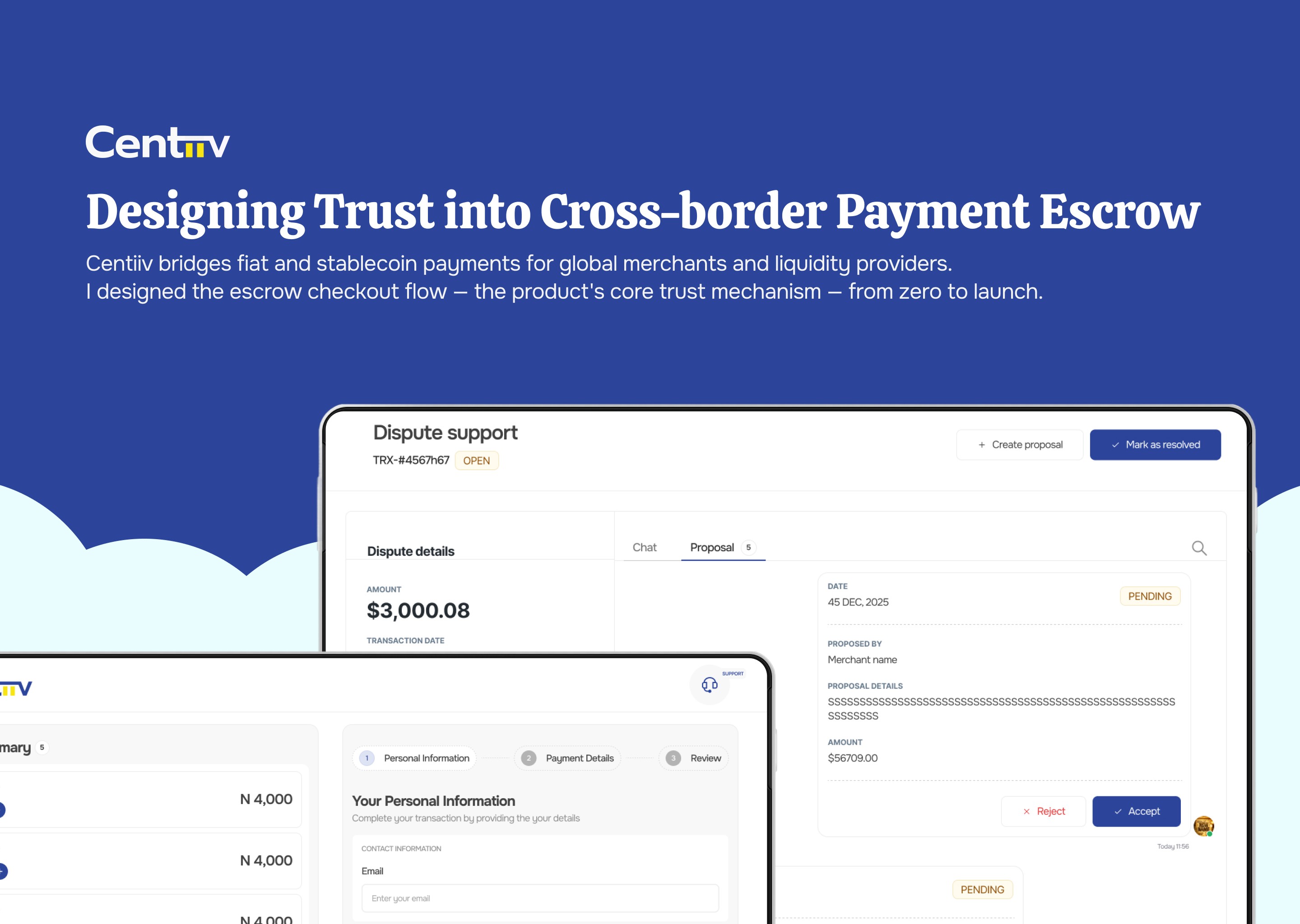
I led the end to end design of the dispute resolution experience.
My responsibilities included:
Designing dispute creation and evidence submission flows
Collaborating with product managers and engineers on implementation requirements
Creating high fidelity designs and interaction patterns for the final experience
Reduced Manual Work
Moved routine dispute handling from support channels into a structured product experience.
Procedural Fairness
Designed a fair process that protected customer funds while supporting merchant claims.
$50k
Platform transaction volume supported by Centiiv's payment ecosystem.
Trust by Design
Turned dispute resolution into a visible trust mechanism rather than a support process.
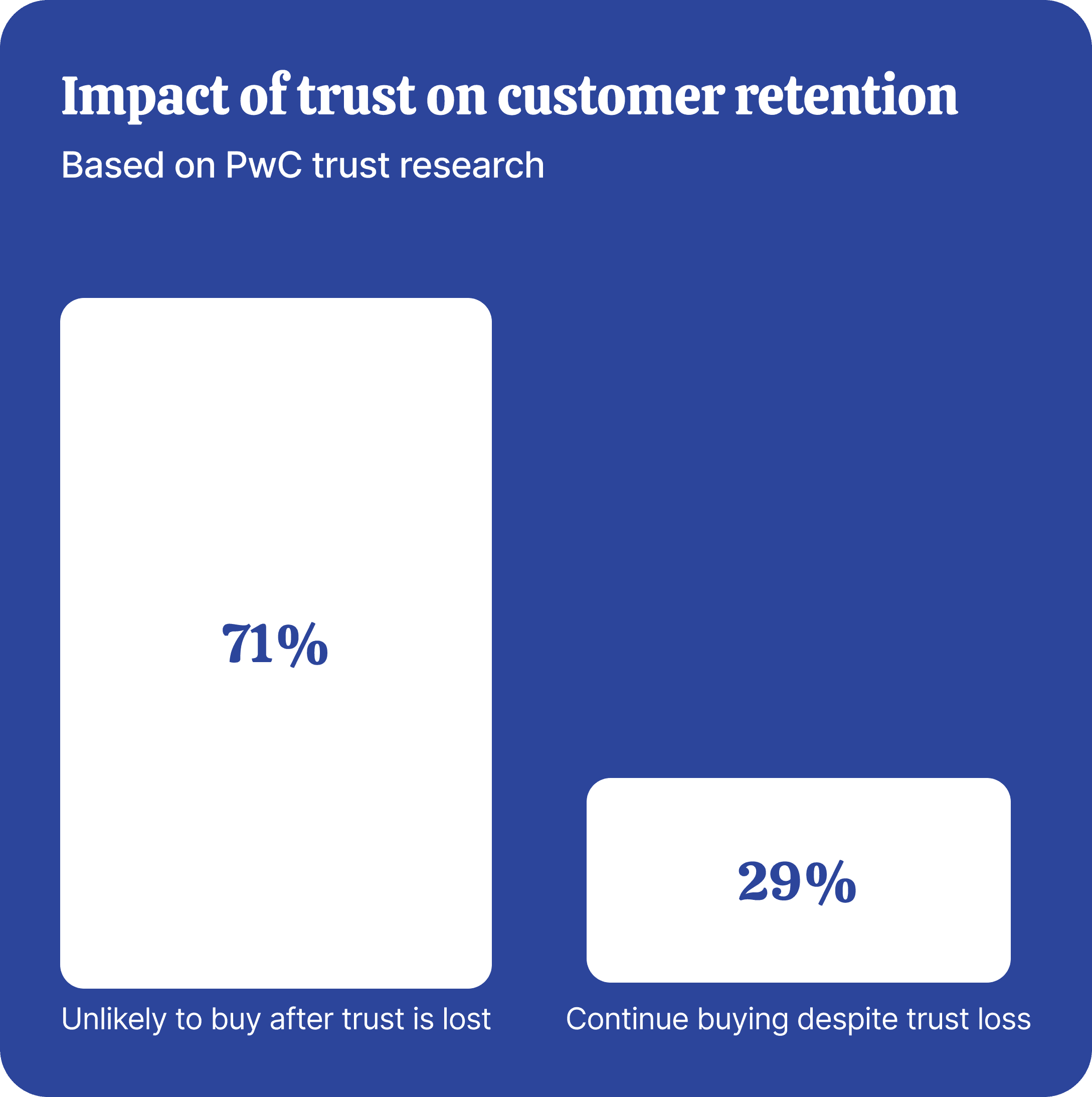
• PwC's consumer research shows that trust and transparency strongly influence purchasing decisions, while friction and uncertainty reduce confidence in digital experiences.
In Centiiv's escrow model, disputes represented the highest risk moment for both buyers and sellers.
Designing a transparent resolution process became critical to maintaining trust and encouraging future transactions.
THE FLOW
1.
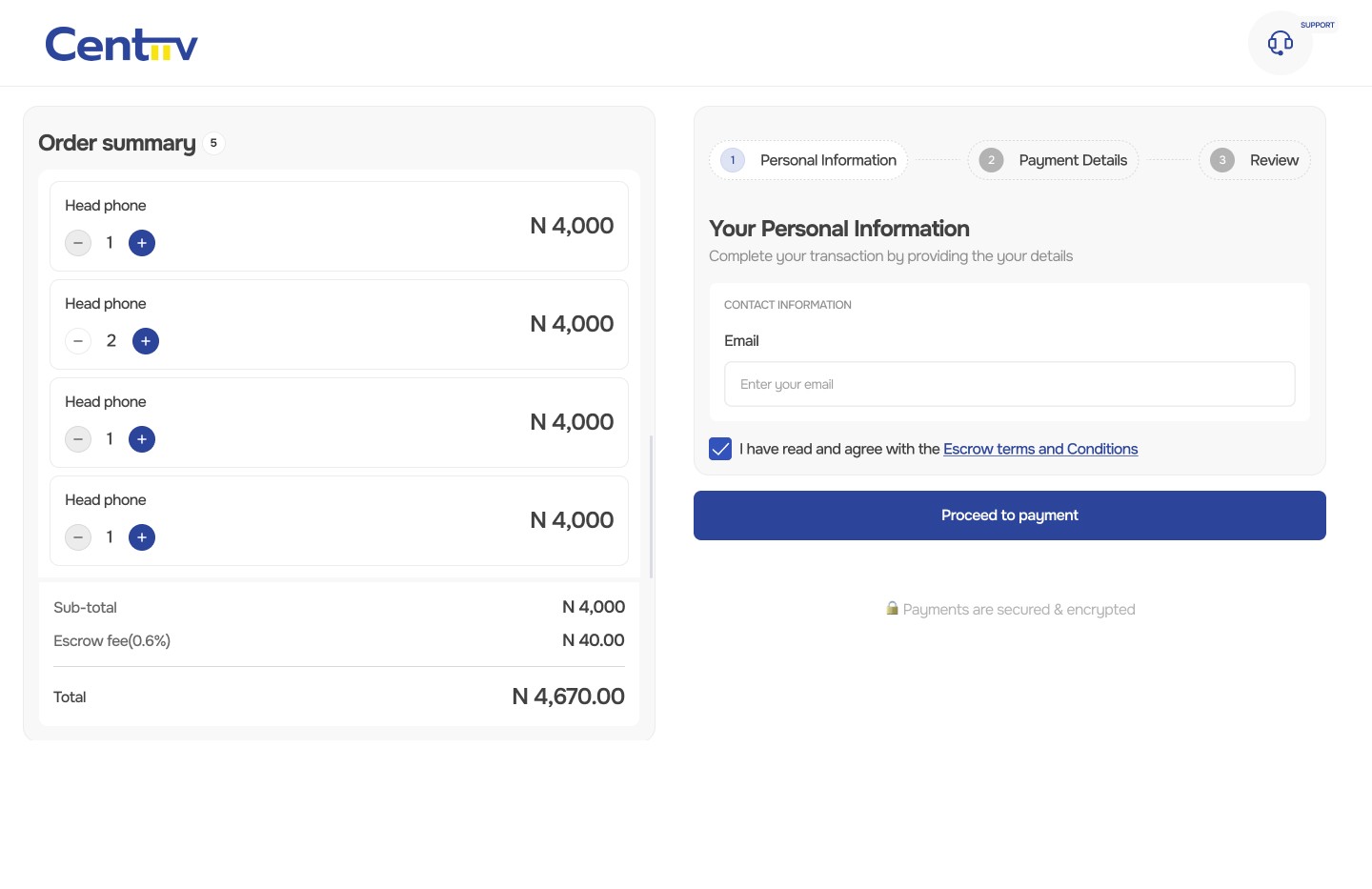
Customer info + terms
Email capture + escrow T&C before payment. Sets legal context early.
2.
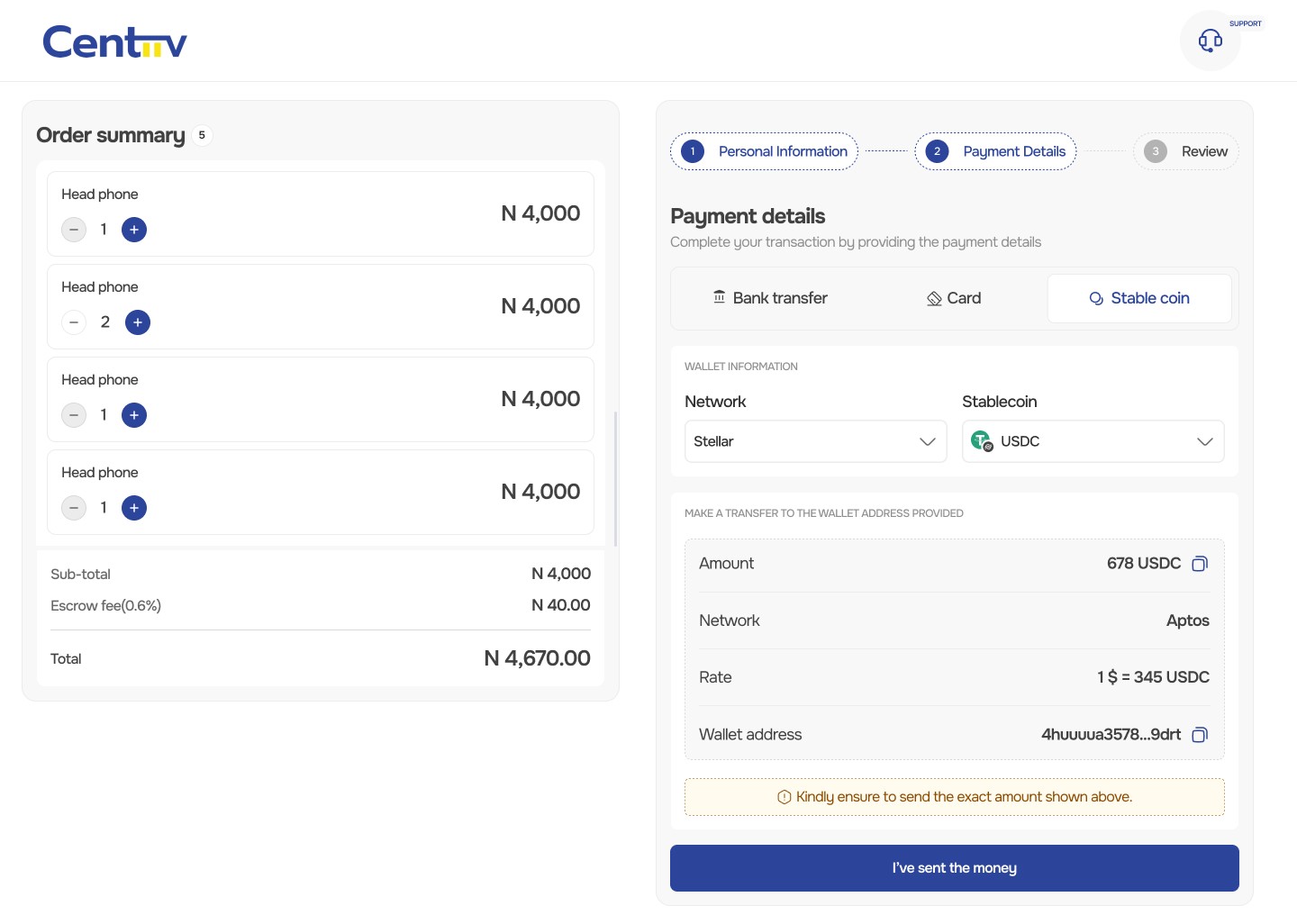
Pay (3 rails)
Card, bank transfer (expiring virtual account), or stablecoin. One surface.
3.
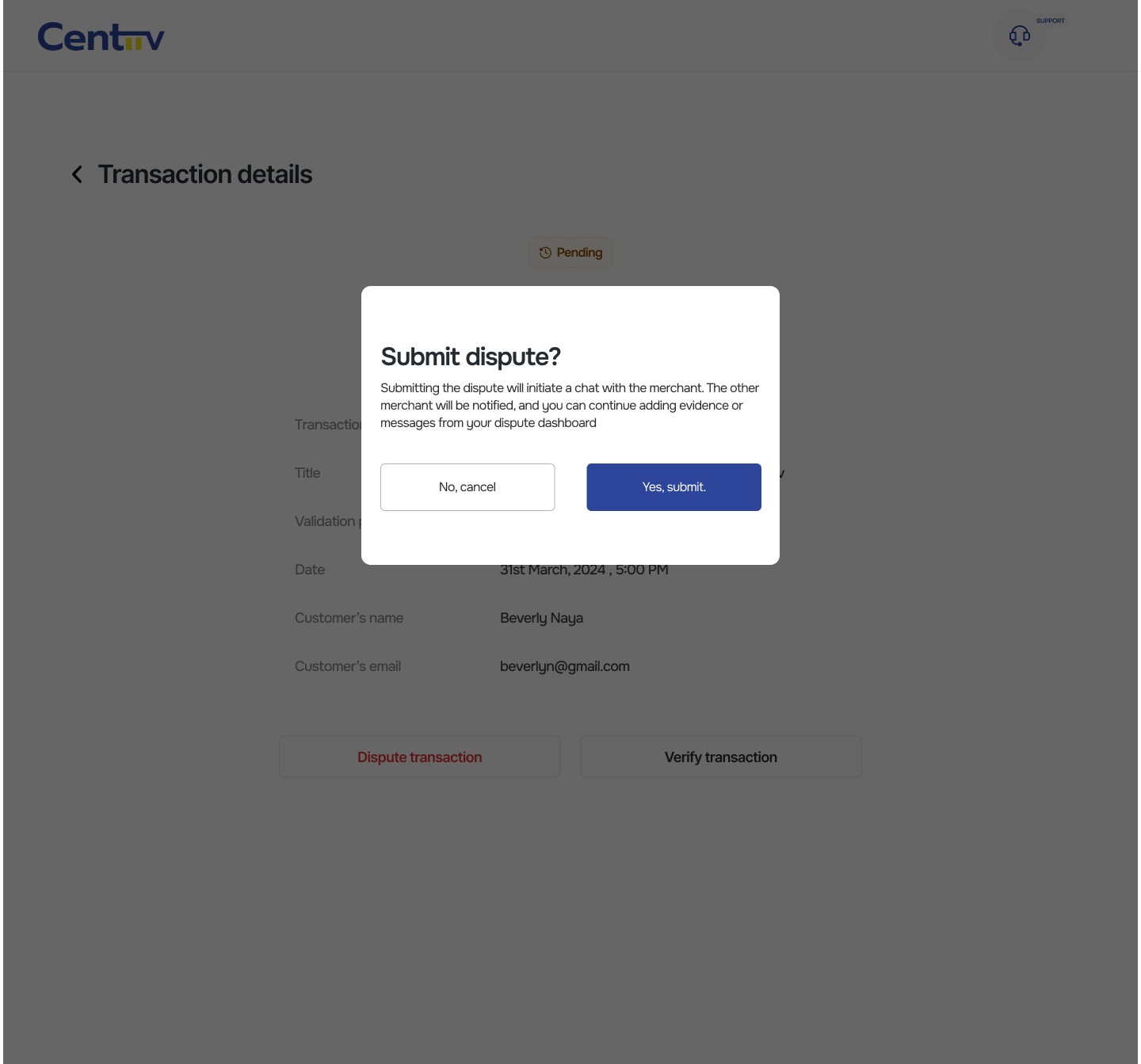
Dispute filed
Funds lock. Merchant submits evidence. Structured, not chat-based.
4.
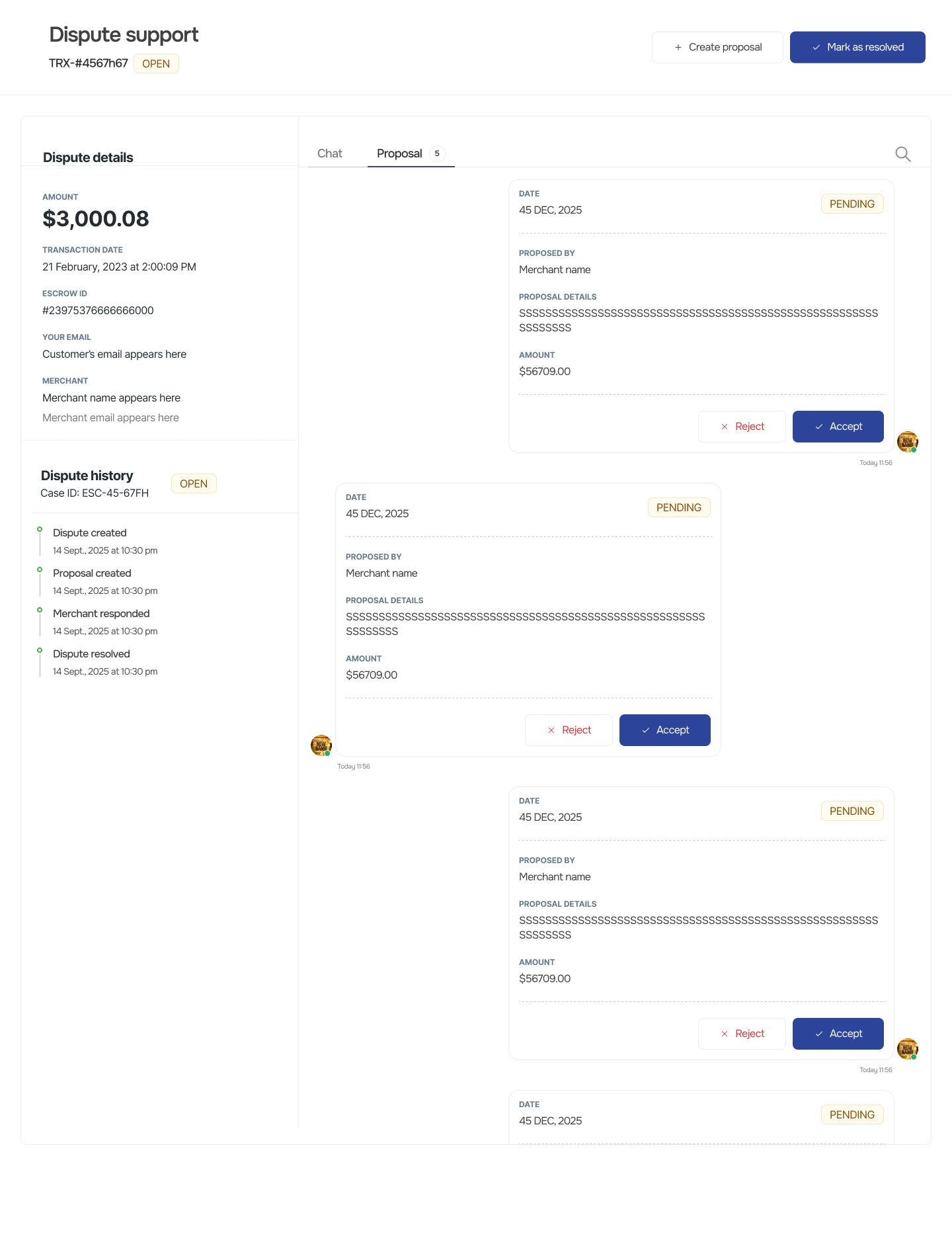
Propose settlement
Either party proposes terms. Other party accepts, rejects, or counters
KEY DESIGN SCREENS
Design Decisions Made
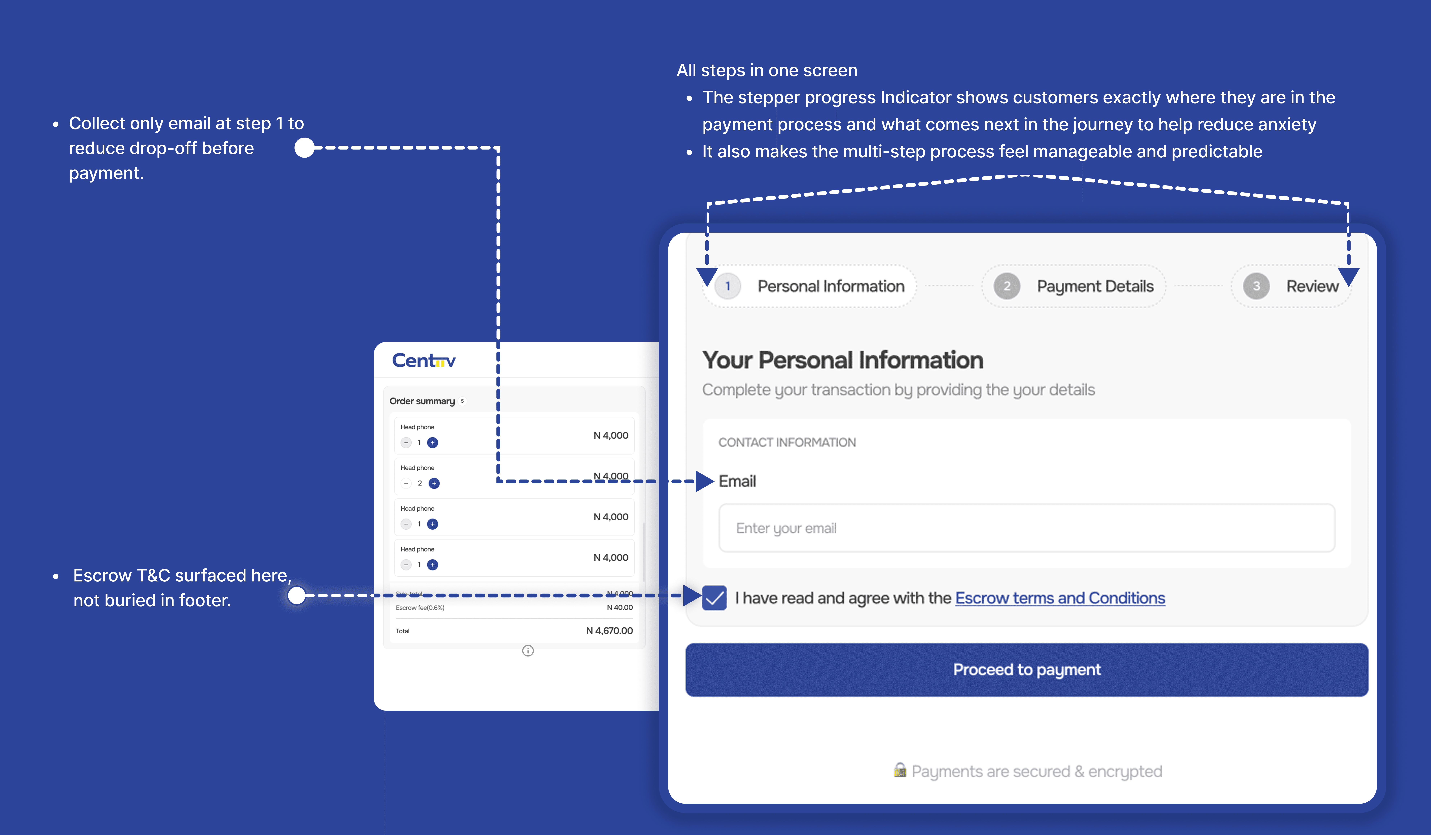
Personal info + escrow entry
• Collect only email at step 1 to reduce drop-off before payment. Escrow T&C surfaced here, not buried in footer.
• All 3 steps on one screen reduces abandonment from method confusion.
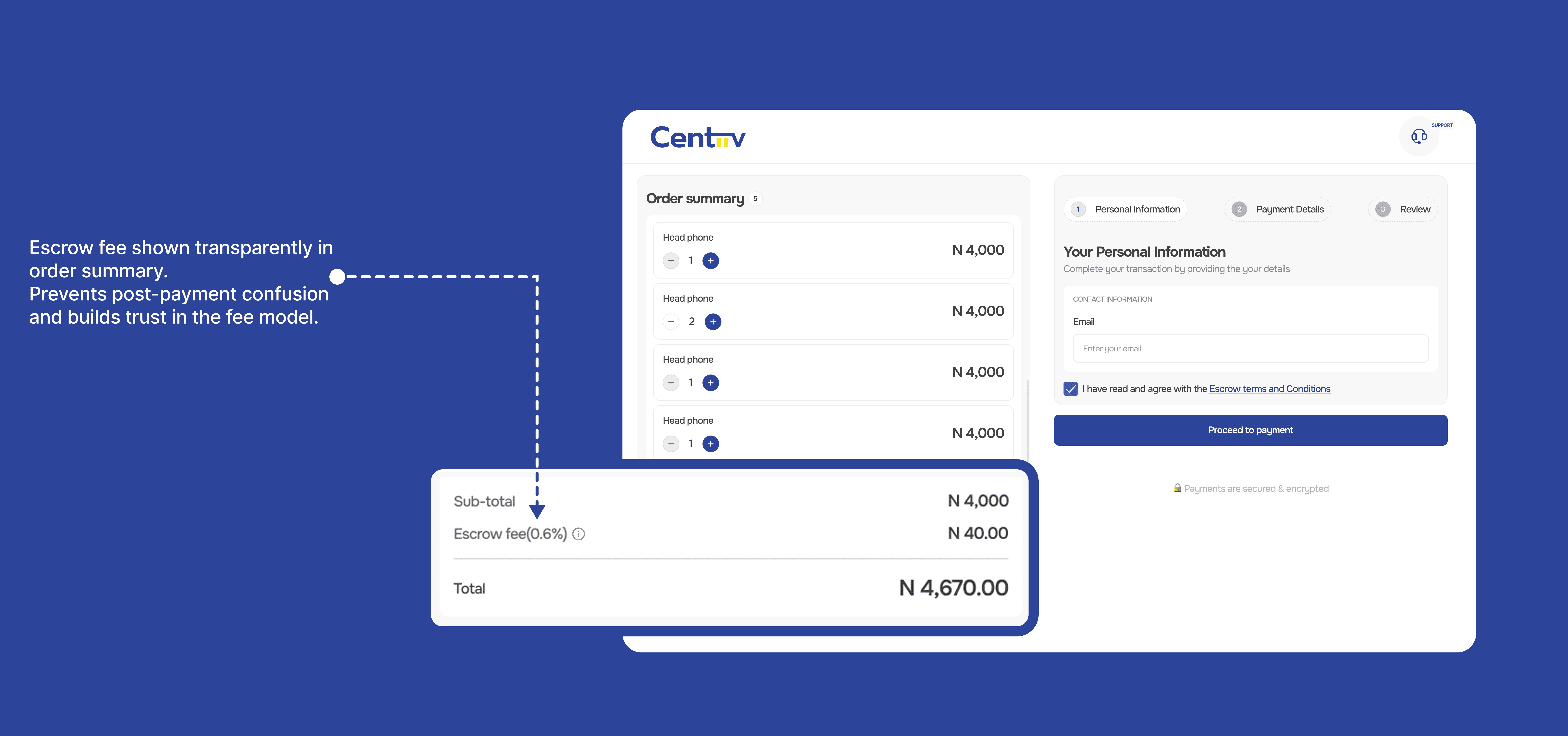
Card payment + order summary
Escrow fee shown transparently in order summary. Prevents post-payment confusion and builds trust in the fee model.
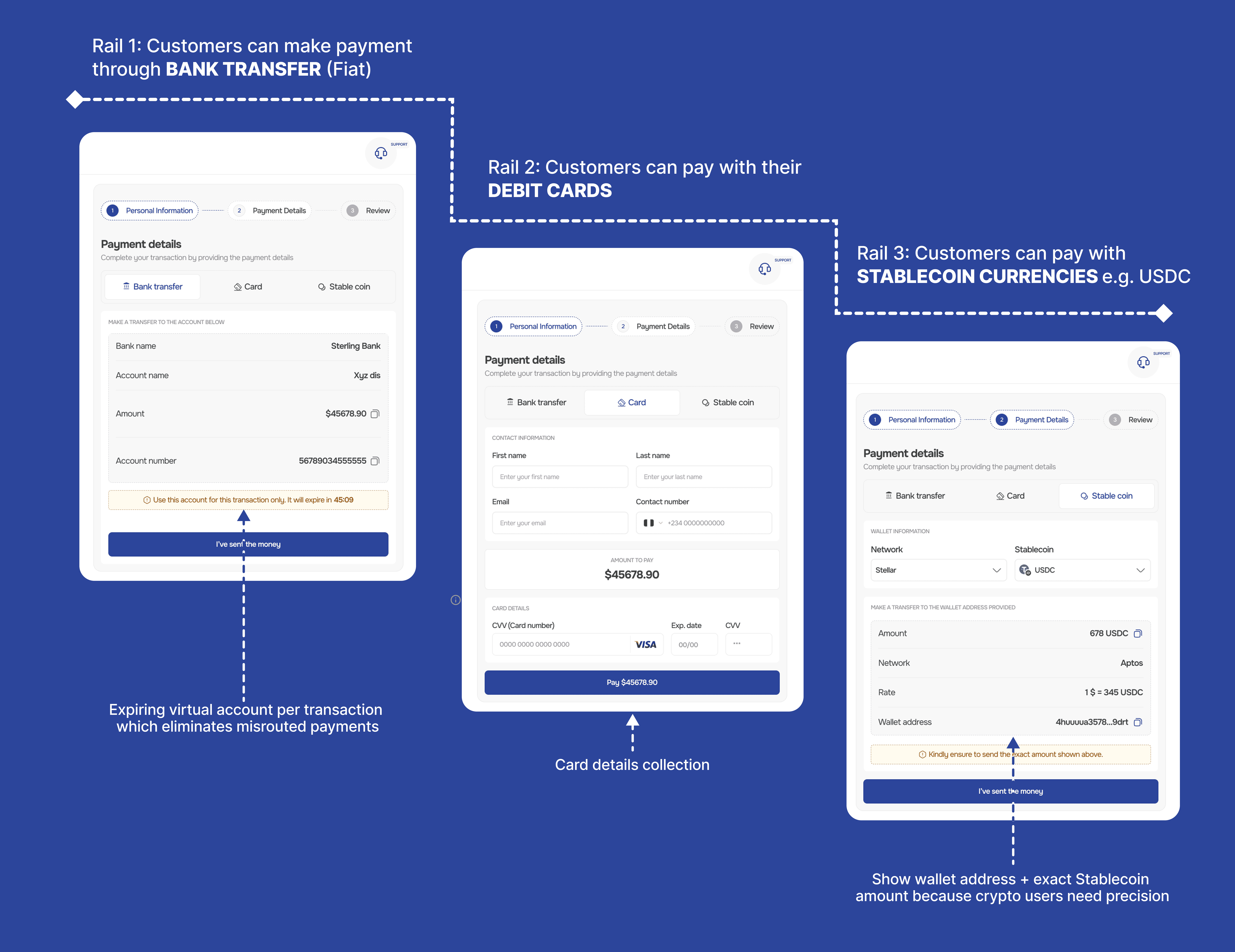
3 payment methods, 1 Payment gateway
• Show wallet address + exact USDC amount with expiry, crypto users need precision
• Shows expiring virtual account per transaction which eliminates misrouted payments
INTERACTION DESIGN
How It Works
Payment gateway : Customer's view
• Entry point for customers is the payment link created by merchants
• Decision: structured form (reason category + description + evidence upload) instead of open chat forces specificity, speeds resolution.
• Decision: separate proposal flow from chat to enable a merchant and customer negotiate amounts without losing dispute history.
• Counter-proposal pattern modeled on legal ADR (Alternative Dispute Resolution).
Entry point of Merchants : Landing Page & Onboarding
• Used a marketing led landing page to explain escrow, cross border payments, and platform value before account creation.
• Separated Login and Sign Up paths to reduce friction for returning users.
• Introduced role selection during onboarding so merchants, aggregators, and liquidity providers entered tailored experiences from day one.
• Exposed platform capabilities early to help users understand where they fit within the ecosystem before committing to sign up.
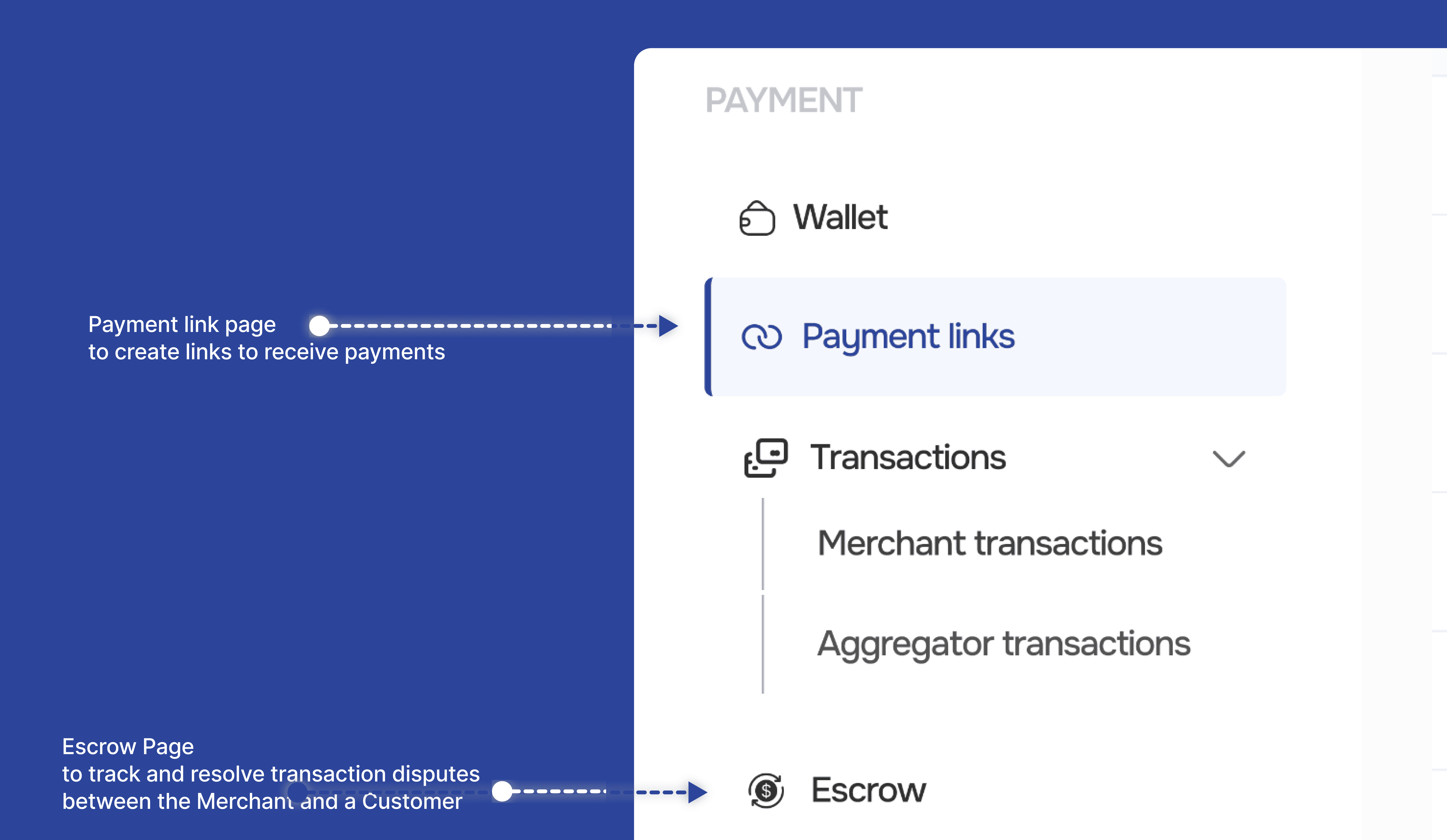
Sidebar & Navigation
• Added contextual tooltips to help users discover features without relying on documentation.
• Used progressive disclosure to reveal information only when needed, keeping the interface approachable.
• Helped users build confidence by explaining unfamiliar terms and actions within context
Create settlement proposal
• Required structured customer claims with evidence to reduce ambiguity and improve resolution speed.
• Centralized merchant-customer communication within a dedicated dispute workspace for transparency and traceability.
• Separated settlement negotiations(Proposal) from dispute discussions(Chat) to preserve context while enabling flexible resolutions.
• Reserved admin intervention for unresolved cases, encouraging self resolution before escalation.
WHAT DIDN'T WORK
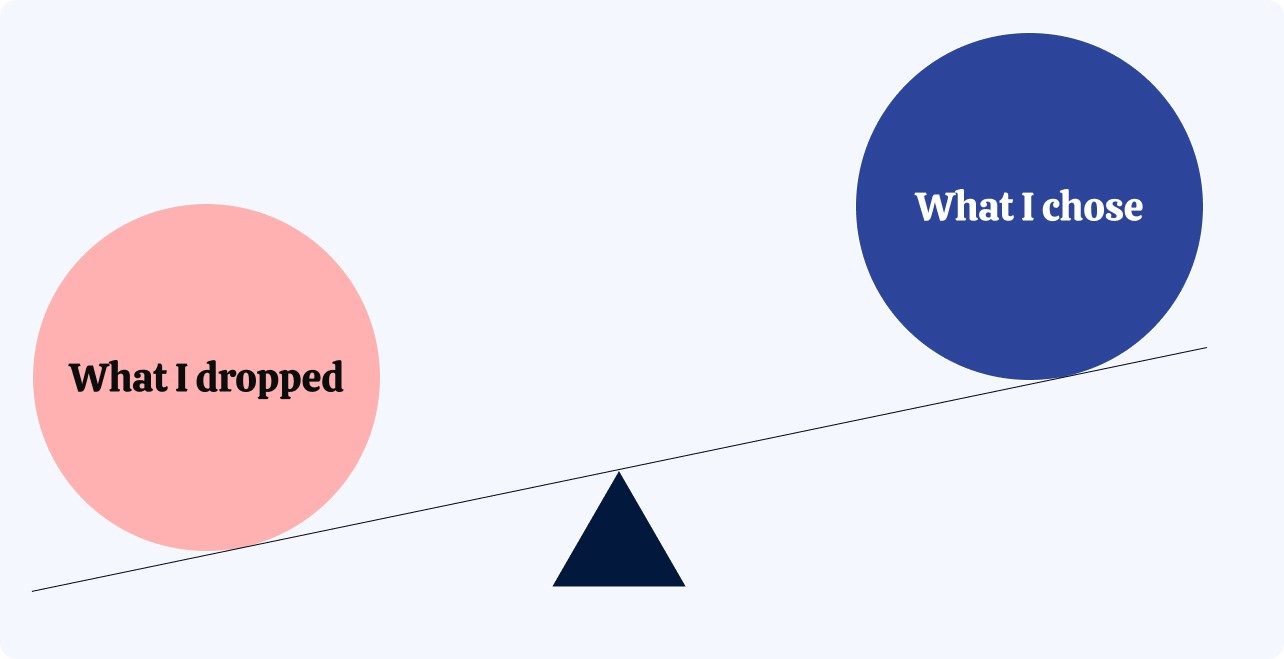
I dropped
Persistent merchant bank account. Simpler to build but caused payment attribution failures in testing, unacceptable at this transaction volume.
I chose
Single expiring virtual bank account per transaction. Prevents mis-routing; adds backend complexity but removes a major support category.
I dropped
Inline dispute form on the same screen. Tested it, users skimmed past it. Separating confirm modal improved completion rate in usability sessions.
I chose
Structured dispute form with evidence upload. Non-negotiable for legal validity. Users initially wanted chat-only, usability tests showed chat led to ambiguous outcomes.
AI INTEGRATION
Edge case mapping
I used Claude and lovable to stress-test the dispute states & caught a missing state (expired escrow, no merchant action) before dev handoff.
Microcopy
I generated 3 variants of the escrow expiry warning. Chose the one that tested clearest with non-crypto users in a quick 3-person session.

Reduced Manual Work
Moved routine dispute handling from support channels into a structured product experience.
Procedural Fairness
Designed a fair process that protected customer funds while supporting merchant claims.
$50k
Platform transaction volume supported by Centiiv's payment ecosystem.
Trust by Design
Turned dispute resolution into a visible trust mechanism rather than a support process.
CHALLENGES
Challenges (and How I Solved Them)
Complexity of Multi Step Flows
• Challenge: Three parties with different needs created endless theoretical debate.
• Solution: I built wireframes early to show the actual user journey and stopped speculation immediately.
Escrow Complexity for Regular Users
• Challenge: Challenge: Most users did not understand escrow or dispute mechanics.
• Solution: I broke the process into simple stages, used plain language and reduced complexity through clarity.
REFELECTIONS & LEARNINGS
What I Learned
This project challenged my ability to design for trust and fairness. When money is at stake and emotions run high, design becomes about managing fear as much as delivering features. I had to:
• Understand what information would actually calm worried users instead of overwhelming them with options
• Design for emotional states including frustration, anxiety and relief with messaging that matched each moment
• Balance transparency with simplicity because showing everything makes disputes feel more complicated, not more fair
• Create separate workflows for different user types so each person saw a straightforward path, not a system built by committee